Materials
Laminate vs veneer vs acrylic — and PU, membrane and glass
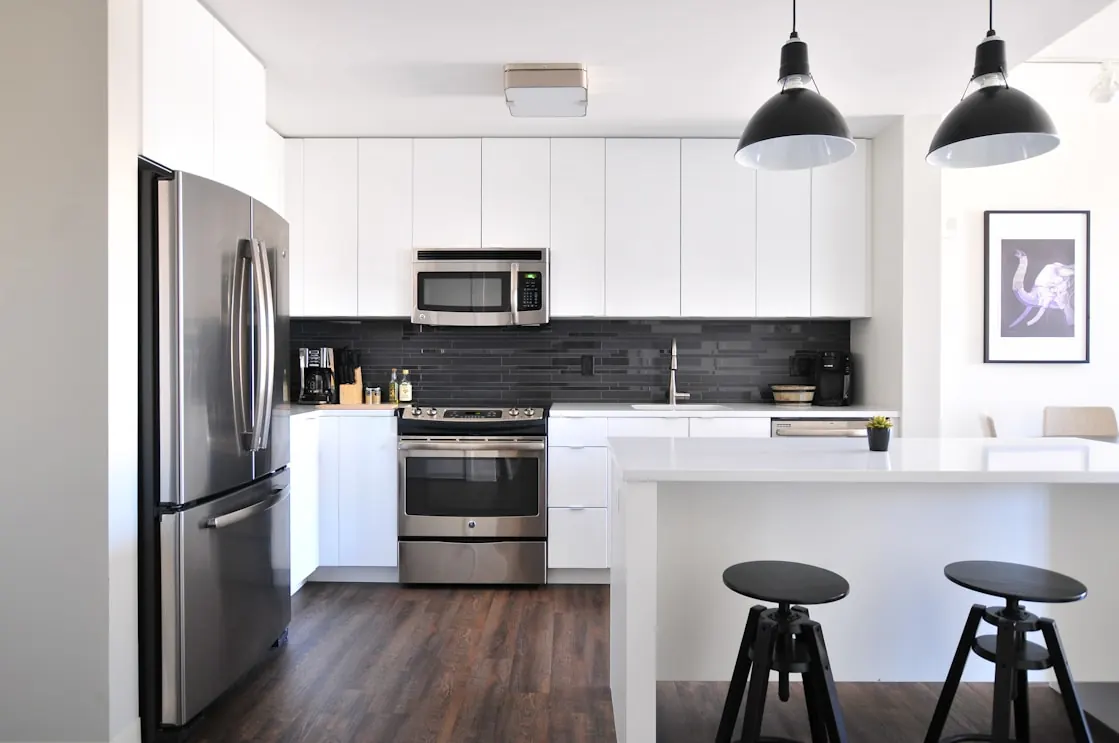
The finish on your shutters is the most visible material in the house and the biggest single swing in cost. Here is how the six common options really compare — on price, on wear, and on a humid July afternoon.
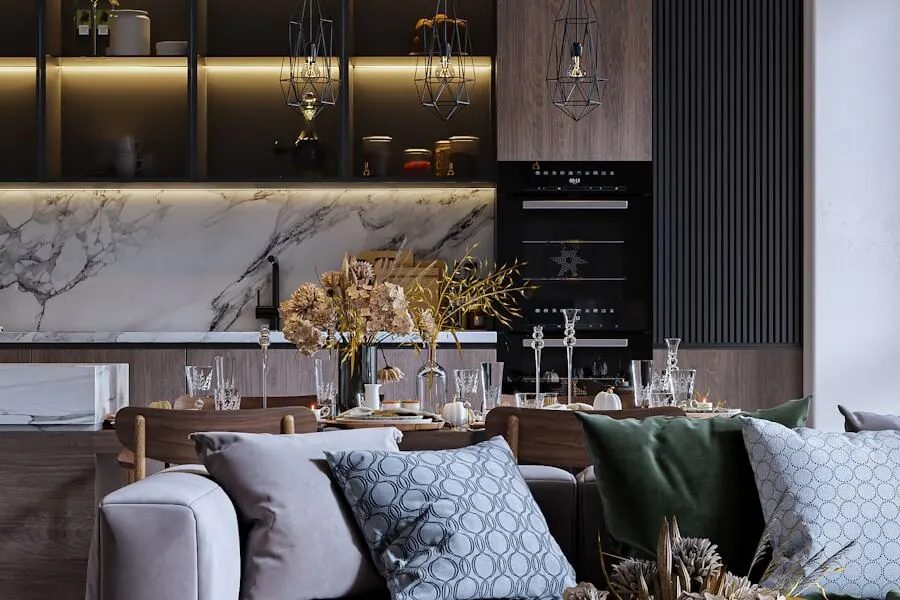
Walk into any modular showroom and you will be shown a wall of shiny samples. What you will rarely be told is how each of them behaves after three monsoons, two children and a thousand rounds of wiping with a damp cloth. This guide compares the six finishes we specify most often — laminate, natural veneer, acrylic, PU, membrane and glass — so you can choose with your eyes open.
First, separate the core from the finish
A cabinet shutter is two things: a core (the board that gives it strength) and a finish (the surface you see and touch). Many quotes blur the two. A beautiful acrylic on a weak board will still swell and sag; a plain laminate on BWP ply will outlast it.
| Core board | Moisture behaviour | Typical use | Wardrobe carcass / sq ft of front | Kitchen base carcass / rft |
|---|---|---|---|---|
| BWP / marine plywood IS:710 ply for walls that see seepage or monsoon damp. | Best of the common boards; tolerates splashes and humidity when edges are sealed | Kitchens, vanities, anything near water | ₹950–1,200 | ₹3,200–3,900 |
| BWR plywood IS:303 ply — the dependable default. | Good for everyday rooms; not for joinery that sits in water | Bedroom wardrobes, TV units, living-room storage | ₹800–1,000 | ₹2,600–3,200 |
| HDHMR board Dense, moisture- and termite-resistant board. | Dense and fairly moisture resistant; holds a smooth edge for profiles | Shutters for PU and membrane, routed designs | ₹700–900 | ₹2,300–2,900 |
| MDF Smooth, paintable; not for humid walls. | Smooth and stable but swells badly if water gets into edges | PU and membrane shutters in dry areas | ₹650–850 | ₹1,900–2,400 |
| Pre-laminated particle board Lowest cost; avoid damp walls. | Cheapest; poor screw holding and moisture tolerance | We avoid it for shutters and carcasses | ₹550–750 | — |
For most homes in Raipur and Bhopal, our default is BWP ply for kitchens and bathrooms, and BWR ply (or HDHMR where a profile is routed) for bedrooms and living rooms. Our monsoon-proofing guide explains why edges matter as much as the board grade.
The six finishes at a glance
Shutter finishes are priced separately from the carcass: per square foot of shutter on wardrobes, and per running foot of base unit in kitchens. These are the rates behind our rate card and calculators.
| Finish | What it is | Look | Wardrobe shutter / sq ft | Kitchen shutter / rft | Best for |
|---|---|---|---|---|---|
| Laminate | 0.8–1 mm high-pressure decorative sheet pressed onto board | Matte, suede, wood grain, stone, high gloss | ₹350–500 | ₹1,100–1,500 | Wardrobes, kids’ rooms, budget-sensitive kitchens |
| Veneer (polished) | Thin slice of real wood (about 0.5 mm) polished with PU or melamine | Genuine grain, warm and varied | ₹850–1,250 | Not offered for kitchens | Feature walls, TV units, master wardrobes |
| Acrylic | 1–1.5 mm PMMA sheet bonded to board, usually high gloss | Deep, mirror-like gloss or super-matte | ₹700–950 | ₹2,000–2,700 | Kitchen shutters, contemporary wardrobes |
| PU lacquer | Multi-coat sprayed lacquer on MDF or HDHMR | Seamless, any colour, matte to piano gloss | ₹1,000–1,450 | ₹2,800–3,800 | Premium kitchens, profile and fluted shutters |
| Membrane (PVC foil) | PVC foil vacuum-pressed over a routed MDF shutter | Seamless edges, carved or shaker profiles | ₹450–650 | ₹1,300–1,800 | Classic-style kitchens and wardrobes away from heat |
| Glass / mirror in profile | Lacquered or back-painted glass in an aluminium frame | Glossy, reflective, easy to wipe | ₹900–1,300 | ₹2,600–3,500 | Wall cabinets, crockery units, accent shutters |
Laminate: the honest workhorse
High-pressure laminate is paper impregnated with resin and pressed under heat into a hard sheet, typically 0.8–1 mm thick for shutters. It is the most widely used finish in Indian homes for good reasons: it resists scratches, takes daily wiping, comes in hundreds of shades and textures, and costs the least.
- Strengths: durable, affordable, easy to replace a single shutter, huge range including convincing wood and stone textures.
- Weaknesses: the edge is a separate PVC or ABS band, so you see a line at every edge; high-gloss laminates scratch and show fingerprints.
- Specify: 1 mm laminate on shutters (0.8 mm is acceptable inside), 2 mm matching edge banding applied by machine, and a balancing laminate on the inner face so shutters do not warp.
Sample tip
Super-matte and anti-fingerprint laminates look wonderful in the showroom and very good at home — but check them under the warm 2700–3000K light you will actually use. Some dark mattes turn muddy under warm light.
Natural veneer: real wood, real care
Veneer is a thin slice of real timber — teak, walnut, oak, ash and others — glued to a board and finished with PU or melamine polish. No two sheets are identical, and that variation is its charm.
- Strengths: genuine wood character, can be re-polished years later, combines beautifully with stone and brass.
- Weaknesses: needs skilled polishing (and seven to ten extra days on site), fades or darkens in direct sun, and is not happy near water.
- Specify: book-matched or sequence-matched sheets for large panels, PU polish rather than basic melamine for durability, and keep veneer away from sinks and west-facing windows without curtains.
Acrylic: high gloss, high drama
Acrylic sheets give the deepest, most mirror-like gloss you can buy at a sensible price, and newer super-matte acrylics offer a soft, velvety alternative. Edges are usually finished with a matching acrylic or laser-fused band that is far less visible than a laminate edge.
- Strengths: stunning gloss, colour-stable, easy to clean, moisture tolerant on a good core.
- Weaknesses: fine scratches show on dark glossy colours; costlier than laminate; a damaged shutter usually has to be replaced, not repaired.
- Specify: leave the protective film on until all site work is finished, clean with a microfibre cloth only, and choose mid-tones or whites if you want gloss without visible swirl marks.
PU paint: seamless and repairable
PU (polyurethane) finishes are sprayed in several coats onto MDF or HDHMR and sanded between coats. The result is seamless — no edge bands at all — and can be any colour, from chalky matte to piano gloss. It is also the only finish that handles fluted, curved and routed shutters well.
- Strengths: no visible edges, unlimited colours, can be touched up or re-sprayed.
- Weaknesses: edges can chip if knocked, quality depends heavily on the polisher and a dust-free curing space, adds time.
- Specify: factory-sprayed PU where possible; ask how many coats and what sheen; avoid very dark gloss on high-traffic base units.
Membrane: classic profiles on a budget
Membrane shutters start as MDF routed with a design — a shaker frame, a groove pattern — over which a PVC foil is vacuum-pressed. They give a seamless, moulded look for much less than PU.
- Strengths: no edge banding, intricate profiles, consistent colour, wipeable.
- Weaknesses: heat is the enemy. Near a hob, oven or in strong sun, the foil can lift and bubble, and it cannot be repaired.
- Specify: use heat shields beside ovens and hobs, avoid membrane on the hob run entirely, and keep it out of direct afternoon sun.
Glass: easy to wipe, heavy to hang
Lacquered or back-painted glass set into slim aluminium frames is practical for wall cabinets and crockery units. It wipes clean in seconds and reflects light around small kitchens.
- Strengths: very easy to clean, moisture-proof, modern look, frames can integrate handles.
- Weaknesses: heavy (needs good hinges or lift-ups), can chip at corners, shows every smudge in gloss.
- Specify: toughened glass where people might lean or knock, frosted or fluted glass where you do not want every jar on view.
Durability and maintenance compared
| Finish | Scratches | Heat | Moisture | Sunlight | Repairable? |
|---|---|---|---|---|---|
| Laminate | Good (matte) / Fair (gloss) | Good | Good with sealed edges | Good | Replace shutter |
| Veneer | Fair | Fair | Poor near water | Fades or darkens | Yes — re-polish |
| Acrylic | Fair (gloss) | Good | Good | Good | Replace shutter |
| PU paint | Fair; edges can chip | Good | Good on HDHMR/MDF if sealed | Good | Yes — touch-up or re-spray |
| Membrane | Good | Poor near hob/oven | Good | Can lift in strong sun | No |
| Glass | Good | Good | Excellent | Excellent | Replace panel |
Which finish where
| Location | Our usual recommendation | Avoid |
|---|---|---|
| Kitchen base units | Matte laminate or acrylic on BWP ply; PU for a premium look | Membrane on the hob run, veneer by the sink |
| Kitchen wall units | Acrylic, PU or framed glass; lift-up doors above the hob | Heavy glass on standard hinges |
| Master wardrobe | Textured laminate, veneer, or PU with a fluted accent | Dark high gloss on large doors (fingerprints) |
| Kids’ rooms | Laminate — scratch-proof and cheap to replace | Veneer and soft PU |
| TV and living feature wall | Veneer or fluted PU, one strong wood tone | Three different finishes on one wall |
| Bathroom vanity | Acrylic or compact laminate on BWP ply, raised on legs | MDF, membrane, veneer |
For layouts and dimensions to go with these finishes, see our kitchen layouts guide and wardrobe design guide. You can also browse finishes side by side in our material library.
How to judge a sample properly
- See it in two lights. Look at samples by a window and under a warm LED. Many finishes change character completely.
- Touch it with clean fingers. Then look at it at an angle. If prints show on a sample, they will show on a 7 ft wardrobe.
- Check the edge. Ask to see an edge-banded sample, not just a flat chip. The edge is where cheap work shows first.
- Ask for the series and thickness printed on the back of the laminate or acrylic sheet, and write it into the quote.
- Put samples together. Your shutter, countertop, floor tile and handle should sit on one board before you sign off anything.
Mixing finishes without creating noise
The most common mistake is not choosing the wrong finish, but choosing too many. A home with walnut laminate in the living room, white gloss in the kitchen, grey suede in the bedroom and veneer on the TV wall will look busy no matter how good each finish is. Pick one primary finish for most of the joinery and one accent at most — the idea at the heart of our essay on restraint. When you have narrowed it down, our wardrobe cost calculator shows how each finish changes the budget.
FAQ