Materials
Flooring options for Indian homes: costs, pros and cons
The floor is the largest surface in your home and the hardest to change later. Here is how the common options compare on cost, comfort, upkeep and how they cope with central India’s heat, dust and monsoon.
Flooring is chosen once and lived on for decades. It sets the colour base for every other material, it decides how cool the house feels in May, and it is the one finish you cannot replace without moving out the furniture. In central India, most new apartments come with vitrified tiles already laid, so the question is often whether to keep, replace or overlay them — and what to use in the rooms that matter most. This guide compares the main options honestly.
The options at a glance
Indicative prices
Figures come from our published 2026 rate card for Raipur and Bhopal: indicative turnkey ranges, excluding GST — an estimate to plan with, not a quotation. Rates include material and laying on a prepared base; demolition of an old floor is extra.
| Flooring | Laid cost / sq ft | Feel | Durability | Maintenance | Best for |
|---|---|---|---|---|---|
| Vitrified tiles (2 × 2 ft, double-charge / GVT) | ₹90–150 | Cool, smooth | High | Low | Most rooms — the default |
| Large-format vitrified slabs (2 × 4 ft, 4 × 8 ft) | ₹150–260 | Cool, smooth, few joints | High | Low | Living and dining areas |
| Ceramic tiles (walls, bathrooms) | ₹70–120 | Cool | Medium | Low | Bathroom walls, light-use floors |
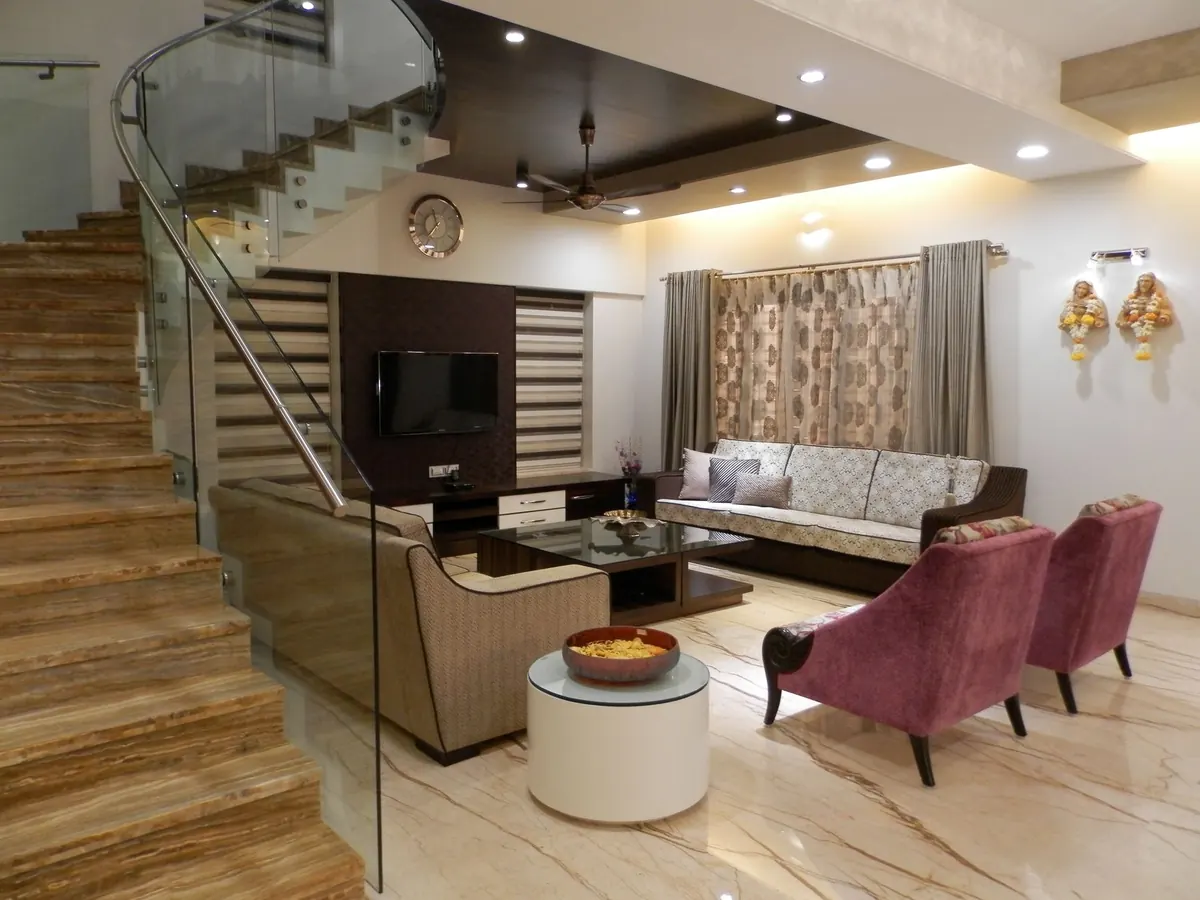
| Indian marble (Makrana, Rajnagar, Katni) | ₹180–450 | Cool, luxurious | Medium; etches and stains | Medium–high | Living and puja areas, traditional homes |
| Italian marble (laid and polished) | ₹450–1,200 | Cool, luxurious | Medium | High | Statement living spaces |
| Granite | ₹180–350 | Cool, hard | Very high | Low | Stairs, kitchens, entrances |
| Kota stone (polished) | ₹90–140 | Cool, matte | High | Low–medium | Balconies, terraces, utility, traditional homes |
| Engineered wood | ₹350–700 | Warm | Medium | Medium | Bedrooms in upper-floor homes |
| Solid hardwood | ₹700–1,400 | Warm | Medium; refinishable | High | Premium bedrooms and studies |
| Laminate wood flooring (8 mm, AC4) | ₹130–220 | Warm | Medium; swells if wet | Low | Bedrooms on upper floors |
| SPC / LVT click flooring | ₹150–280 | Warm-ish, quiet | High; waterproof core | Low | Renovation over old tiles, bedrooms, kids’ rooms |
| Vinyl sheet | ₹60–120 | Soft, quiet | Medium | Low | Rentals, kids’ play areas, quick refreshes |
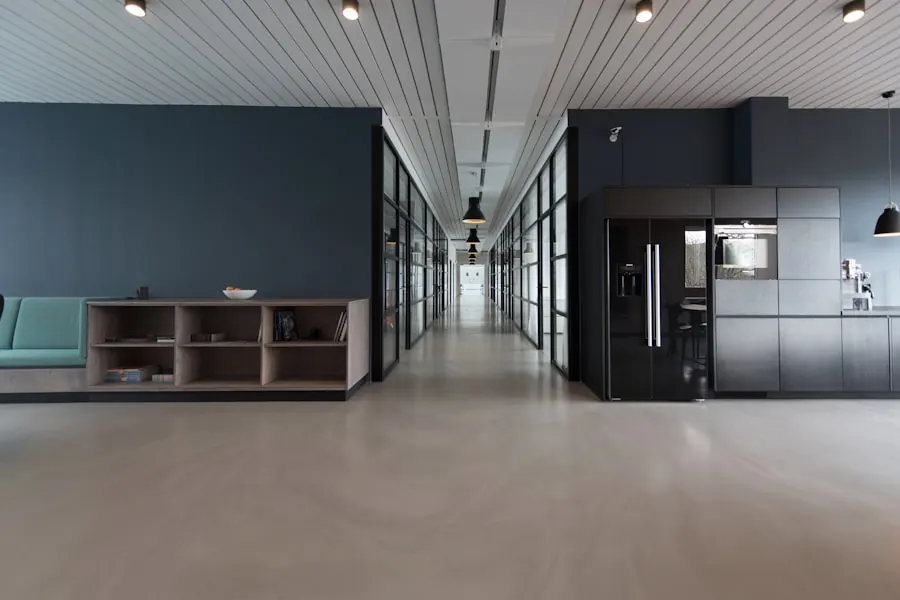
| Epoxy coating | ₹120–250 | Seamless | High if the base is sound | Low | Studios, utility areas, contemporary spaces |
| Terrazzo (cast in situ) | ₹250–450 | Cool, speckled, seamless | Very high | Low | Living areas and stairs with a crafted look |
For whole-home estimates our calculator uses three flooring levels — vitrified tiles (2 × 2 ft / 2 × 4 ft), laid at ₹110–150 per sq ft, large-format glazed vitrified slabs or laminate wood floor in bedrooms at ₹170–240, and italian marble (laid and polished) or engineered wood at ₹380–650.
Vitrified tiles
Vitrified tiles are fired at high temperatures to a very low water absorption, which makes them hard, stain-resistant and easy to clean. They are the default floor in most new Indian homes for good reason. The main types:
- GVT / PGVT (glazed / polished glazed vitrified): a printed glaze layer allows convincing marble, wood and stone looks. PGVT has a high-gloss polish; GVT is matte or satin.
- Double-charge: two layers of pigment give a thicker wearing surface; patterns are simpler but wear well in heavy traffic.
- Full-body: colour runs through the tile, so chips are less visible.
Large formats — 600 × 1,200 mm, 800 × 1,600 mm and bigger — mean fewer joints and a calmer look, but need a flatter base and more skilled laying to avoid lippage (uneven edges). Use matte or anti-skid finishes in bathrooms, balconies and anywhere elders walk with wet feet.
Buying tip
Buy all tiles for a floor from one batch, check that the shade and size codes printed on the boxes match, and allow ${pctR(Wst.tilesStraight)} extra for straight laying, or ${pctR(Wst.tilesDiagonal)} for diagonal patterns. Keep a box aside for future repairs — the exact shade may be discontinued.
Marble
Marble remains the floor many Indian families aspire to, and in central India it does not have to be imported to be beautiful. Indian marbles from Rajasthan — and from Katni, here in Madhya Pradesh — offer a wide range of colours at a fraction of imported prices.
- Strengths: cool underfoot in summer, a depth no tile fully copies, can be re-polished to look new after years.
- Weaknesses: marble is porous and calcium-based. Haldi, lemon, tamarind, vinegar and some cleaners etch or stain it. Some white marbles can yellow over time.
- Practicalities: laying is slow — marble is bedded, left to cure, then ground and diamond-polished in place, ideally after other heavy work is done. Seal it, and avoid it in kitchens.
Granite
Granite is harder and far less porous than marble, so it shrugs off stains and scratches. It is ideal for staircases, entrances and kitchen floors. Polished granite is slippery when wet, so use a leather (honed) or flamed finish outdoors and on stairs. Dark granite on a sunny balcony gets very hot underfoot in summer.
Kota stone
A fine-grained limestone from Rajasthan, Kota stone has been used across central India for generations — on verandas, terraces, schools and older homes. It is affordable, naturally slip-resistant, cool and very durable. Its blue-green or brown tone is modest rather than glamorous, but machine-polished Kota looks handsome in traditional and contemporary homes alike. Oil stains need prompt cleaning, and a sealant helps in kitchens and utility areas.
Engineered and solid wood
Nothing feels like real wood underfoot, and it suits bedrooms and studies beautifully. But wood moves with humidity, and central India’s monsoon swings it hard. Engineered wood — a real wood top layer on a stable multi-layer core — handles these swings far better than solid planks. Let boards acclimatise in the room before laying, leave expansion gaps at the edges, avoid ground-floor rooms with rising damp and keep it out of kitchens and bathrooms. Make sure the base is dry and treated against termites.
Laminate flooring and SPC
Laminate flooring is a printed wood-look layer over an HDF core. It is affordable and quick to lay, with abrasion ratings (AC3 for homes, AC4 for heavier use), but water at the joints makes the core swell — so avoid it near balcony doors, kitchens and bathrooms, and on ground floors.
SPC (stone polymer composite) or rigid vinyl has a waterproof mineral-and-PVC core with a wood or stone print and a clear wear layer on top. It clicks together over an underlay and is often laid directly over existing tiles, which makes it very popular for renovations: no demolition, no dust, often a day or two per room. Look for a wear layer of at least 0.3–0.5 mm for homes, and protect it from heavy furniture dents and long hours of strong direct sun, which can fade the print.
Epoxy and microcement
Seamless poured or trowelled finishes give a calm, continuous look that suits minimal interiors. They depend entirely on the base: any crack in the screed below will reflect through. They are best handled by specialist applicators and are more common in studios, shops and offices than in homes.
Choosing for central India’s climate
- Heat: stone and tile stay cooler underfoot through April–June; wood and SPC feel warmer, which is pleasant in bedrooms with AC and in the short winter.
- Monsoon: choose water-tolerant floors at entrances, balconies and anywhere near a door that may be left open during rain. See our monsoon-proofing guide.
- Dust: mid-tone and lightly patterned floors hide dust best. Pure white and very dark polished floors show every footprint.
- Safety: high-gloss floors look beautiful in showrooms and are slippery at home with wet feet. Prefer matte or textured finishes in bathrooms, balconies, kitchens and homes with elders.
Room-by-room recommendations
| Area | Our usual choice | Also good | Avoid |
|---|---|---|---|
| Living and dining | Large-format vitrified or Indian marble | Microcement, Kota (polished) | High-gloss in homes with elders |
| Bedrooms | Vitrified, engineered wood or SPC | Laminate (upper floors) | Polished granite (cold, hard, glare) |
| Kitchen | Matte vitrified or granite | Kota stone, sealed | Marble, laminate, solid wood |
| Bathrooms | Anti-skid vitrified or ceramic | Honed stone | Polished marble, any wood-based floor |
| Balcony and utility | Kota stone or anti-skid vitrified | Flamed granite | Laminate, polished tiles |
| Staircase | Granite with a honed nosing or grooves | Kota stone | High-gloss tiles |
| Renovation over old tiles | SPC | Thin large-format tiles over existing (if levels allow) | Breaking sound floors unnecessarily |
Laying matters as much as the material
- A level base: large tiles, wood and SPC all need a flat substrate. Uneven screeds cause lippage, hollow tiles and clicking floors.
- Joints and expansion: leave 2–3 mm tile joints filled with epoxy or a good polymer grout, and expansion gaps at walls (hidden by skirting).
- The tap test: after laying, tap tiles with a coin; hollow sounds mean poor bedding that will crack later.
- Protect it: cover finished floors with protection sheets during carpentry, painting and polishing work.
- Sequence: stone polishing is done after most heavy work; tiling is done before joinery is measured. Our cost guide and checklists cover the sequence and budget.
Estimating quantity and cost
Measure each room and add a cutting allowance — 5–8% for tiles laid straight, 10–15% for diagonal patterns and 5–10% for wood and plank floors — then add skirting separately. As an example, re-flooring a 900 sq ft 2BHK with large-format slabs at ₹150–260 per sq ft, plus ₹25–45 per sq ft to remove the old tiles and re-level, comes to about ₹1.6–2.7 lakh. Overlaying the same area with SPC at ₹150–280 per sq ft costs about ₹1.4–2.5 lakh, with no demolition and much less disruption. Both exclude GST.
Our tile calculator works out tile counts and boxes, and the area converter switches between sq ft and sq m when brands quote in different units. You can also compare finishes side by side in our material library.
FAQ